Showing posts with label ecology. Show all posts

The Sympoiesis Garden.

  An Art & Ecology project and research into gardening as artistic practice.

In September 2022 I started a one year research at the Royal Academy of Antwerp. For the duration of an Academic year I shift my practice towards organising a community garden together with the art students. We meet weekly to garden together in the historical garden of the Academy.  

Sympoiesis means 'making together', it comes from the book Staying with the Trouble by Donna Haraway. In the garden we work towards restoring ecology from a non-human-centred perspective based on the books of Donna Haraway, Anna L. Tsing, Robin Wall Kimmerer, Jamaica Kincaid and many more. We focus on diversity in plants, soil, critters, patches, views and techniques. We try to decolonize the garden practice and take up a multicultural and non-binary practice.  

Climate change is only going to become more important, and many artists care about how they can help. In order to find an meaningful approach with ecology it is interesting to work from a pratice based on understanding: to really engage with soil, plants, birds, insects... 

Working with nature goes both ways, it will restore ecology in the garden and it will inspire new ways of thinking within an artistic practice. This change of perspective is a shift towards a multitude existing together, a thinking with. When we touch nature, nature touches us, and the trees, stones and compost become meaningful, together we make sense.

The historical garden of the Royal Academy is a protected area, with a landscape design from 1905 and to be able to open up this garden to work together is a meaningful and very important change in the whole ecology of the Academy. Now we have a place where we can interact and study with nature.

I am writing a detailed page on the continuation of the project: the changes in the gardens and what comes in to live with us on a separate page: https://elinedc.blogspot.com/p/the-royal-academy-of-antwerp-garden.html

You can also follow the instagram profile: https://www.instagram.com/royalacademyantwerpgarden/

During this year I keep my studio practice and continue to paint, draw, photograph, film, write and all the other things I like to do in a studio but it will be less vocal. The Gesamthof, A Lesbian Garden continues as well and is very much connected to this research, this tiny ecology is in a healthy condition and getting better all the time. The spill over effect of lots of plants in a small place means we can share seedlings and divide and share plants with the garden community to increase the diversity in the Academy gardens. 

Both projects, the Gesamthof and the Sympoiesis Garden, are pioneering in art & ecology, they are among the first and we invent new futures as we go along. There is a lot of groundwork to be done and we can do this because of the support and interest from both within and outside the Academy.


The historical garden of the Academy of Fine Arts is located in the cente of the city of Antwerp.
 

The communication started with anonymous notes left in various places in the Academy to keep expectations open.


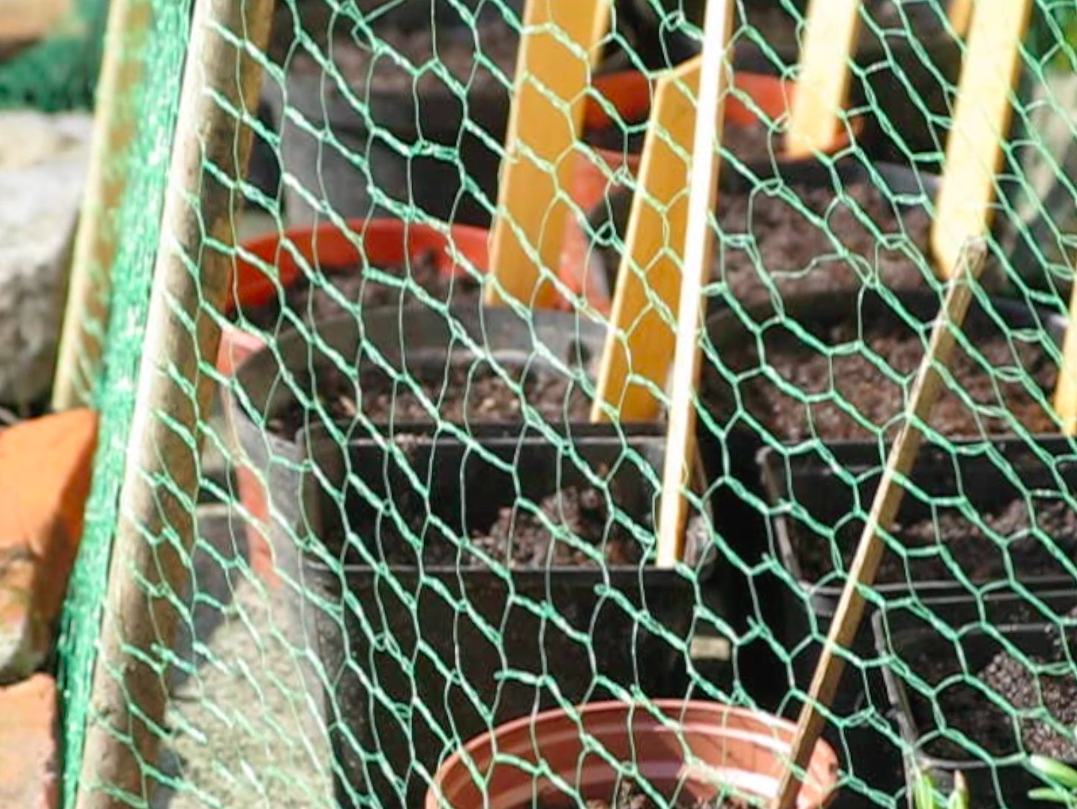
The secret garden was a bare patch of ground and we built a natural pond for biodiversity.


We start small, it's not about reaching a deadline, this project is ongoing in its very nature.
 

We work from a multispecies perspective, this is not about beauty or produce in a human-centred design.

 
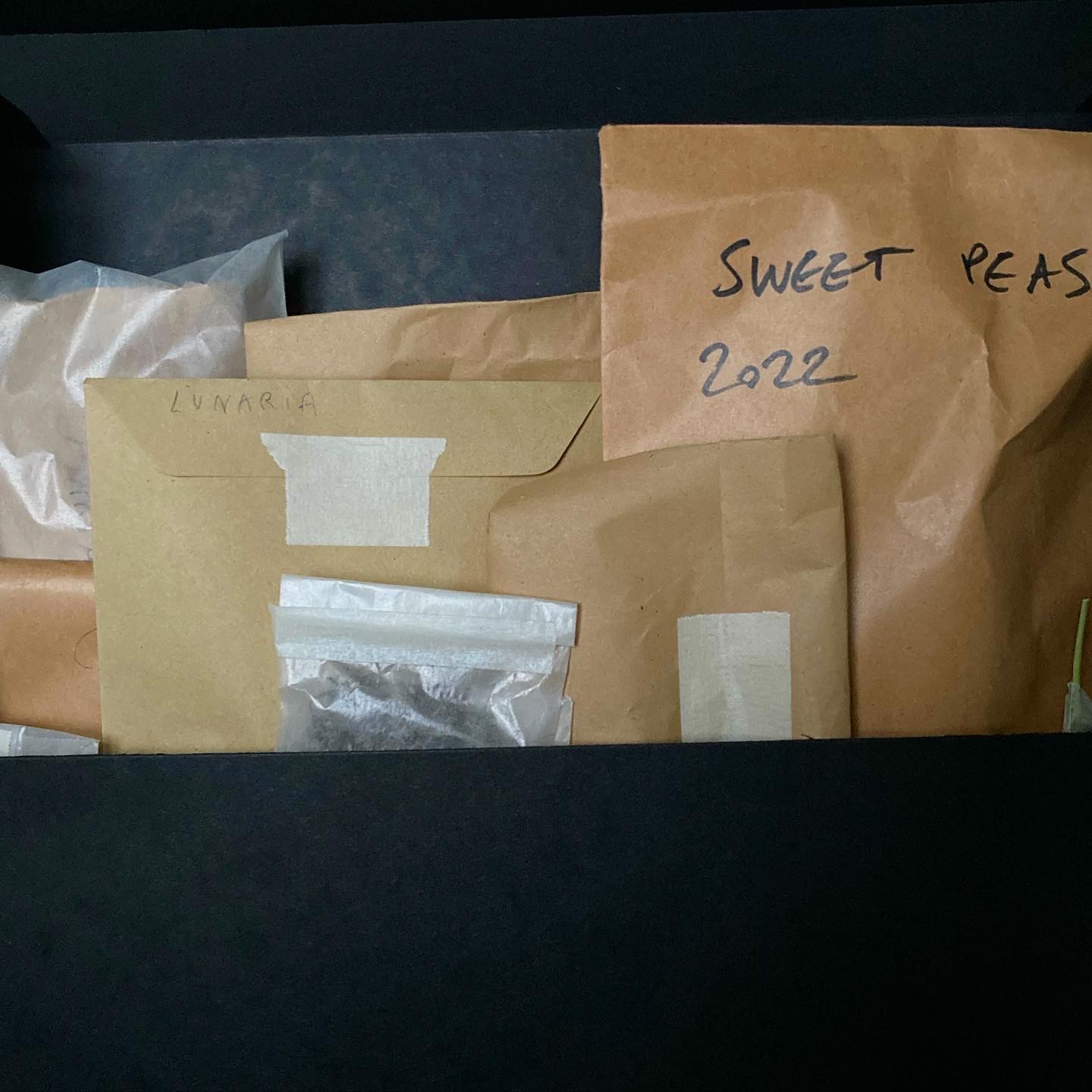
The plants and seeds are mostly leftovers from the Gesamthof and selected for the context in the Academy: a woodland patch or a secret garden.


Gesamthof / A Lesbian Garden


Premiere short film (15', 2022)

Screening at MORPHO on 30 july at 21:30h, entrance via Extra City, Provinciestraat 112
 
Anne Reijniers & Eline De Clercq invite you to the premiere of their short film Gesamthof / A lesbian garden, an art - nature project in the monastery garden of Extra City and MORPHO. In this time document of the garden we follow a tour with Eline De Clercq and the MORPHO artists in residence. The garden provides an entry point to talk about diverse topics such as colonialism in botany, the ambiguity of naming, the social expectations of women and the search for a lesbian identity.
 
Anne Reijniers and Eline De Clercq are both artists and gardeners living in Antwerp. Anne Reijniers is part of the filmmakers collective 'Collectif Faire-Part' and participated in MORPHO's development residency in 2021. Eline De Clercq is a visual artist, painter and rents a studio at MORPHO in Ploegstraat since 2019 when she also started to work in the monastery garden.

The film shows the Gesamthof, a lesbian garden - including trans people -  inspired by the books of Donna Haraway, Anna Lowenhaupt Tsing, Jamaica Kincaid, Robin Wall Kimmerer, Ursula Leguin and many other thinkers who are working on togetherness in the Plantationocene. The Gesamthof puts thoughts into tangible practice: Haraway's queer kinship, speculative fabulations, situated knowledge and Tsing's explanation of a complex patchy capitalism and the human aspect into the restoration of post-industrial land as well as being part of the ecology. In the garden we see how compost works, what soil can do and how a pine tree is a great pioneer. In the film we document the garden and our place in it along the garden path. The tours that are given in the garden activate the stories that are shared between the human and nonhuman inhabitants. 

The temporary nature of the garden, the residents and the project, gives this short film an urgency. We don't know how long we can stay at this location, and climate change is happening now, both makes us feel like we have to keep working at a better understanding of what ecology means in a multilayered compost.

There is an entire page on the garden project, with old photos, new images and where you can read the garden recipe: 

https://elinedc.blogspot.com/p/the-gesamthof.html

or follow on instagram for updates @wool_publishing

Film still from 'Gesamthof / A Lesbian Garden 2022 on being useful.


Film still from 'Gesamthof / A Lesbian Garden 2022 on how to begin.


Film still from 'Gesamthof / A Lesbian Garden 2022 how to find plants.


Film still from 'Gesamthof / A Lesbian Garden 2022 on new names for old plants.


Film still from 'Gesamthof / A Lesbian Garden 2022 on the archeology of the soil.


Film still from 'Gesamthof / A Lesbian Garden 2022


View on the lesbian garden from the studio by Eline De Clercq


Unsuspected Violets

Installation of 3 flags in oil on wool and silk, 30 labels in wool, silk and kevlar, 2021


The work 'Unsuspected Violets' is a combination of flags and labels that are placed in the trees of the park Hof de Bist, waving high from the beech branches along the paths. They are made specifically for the exhibition 'Point of No Return', curated by Benny Van den Meulengracht-Vranx with art works brought together on climate change.


During my walk in Hof de Bist, I came across a small group of woodland violets, unexpected and moving in their simple beauty. They were the inspiration to make wool and silk flags to mark the locations where inconspicuous plants grow. The woodland violets on the flags are drawn after the violets in Emily Dickinson's Herbarium, which she started in 1846 and it still exists today. The title refers to a poem in which the violets are the silent witnesses of her feelings for Susan. The labels are each described with a word from her poems, they connect feelings with plants like the 'unsuspected violets' from the title. Unsuspected Violets is a work that draws attention to the invisible nature of lesbian identity, it makes language visible, it shows the plants that Emily writes about, it refers to being a lesbian and being invisibly different. Ecology and identity are central to this work of drawings and texts on fabrics. The changes in the climate are not something that happens outside of us, we are part of this and to understand how this affects us we need to become aware of our 'environmental identity' (to use Susan Clayton's words). Unsuspected Violets is a work on creating awareness of our own identity, it could possibly be lesbian, it must certainly be environmental.


to-no

To-no is a self-published book about words. The book contains the collected texts by the artists Yoko Enoki, Koyuki Kazahaya and Eline De Clercq. These short texts borrow words from Dutch, English and Japanese that can’t be exactly translated in order to explain what can’t be said in our own words. Inspired by Virginia Woolf’s essay ‘On Craftmanship’ this book is about sharing words between cultures.


To-no is an open project and continues to gather essays by artists who use their experiences in art and cultures to share words. The texts are both in English and in the first language of the artists. This first publication is an unedited limited edition of 25 handmade books riso printed at the Frans Masereel centre, none of the books are for sale. Instead the book functions as an artwork and can be added to exhibitions and when someone wants to read it they can find the entire text online:


https://annuel2.framapad.org/p/to-no-9z5p


About the authors:

Yoko Enoki is a painter who lives in Yokosuka, Japan. She got her bachelor in painting at Tsukuba university and her master in fine arts at Royal Academy of fine arts Antwerp.
 http://www.yokoenoki.com/

榎木陽子

横須賀在住の画家。筑波大学芸術専門学群洋画科卒業、アントワープ王立芸術アカデミーファインアート科修了。

 
Koyuki Kazahaya is a visual artist who lives in Brussels. She got her master in printmaking at Musashino Art university, 2nd master in fine arts at Royal Academy of fine arts Antwerp and Manama at Sint Lucas Antwerp. http://koyuki-kazahaya.blogspot.com/

風早小雪

ブリュッセル在住のビジュアルアーティスト。武蔵野美術大学油画科版画専攻修了、アントワープ王立芸術アカデミーファインアート科修了、セントルーカス大学リサーチプログラムManama修了。

 
Eline De Clercq is a painter who lives in Antwerp, she got her master in fine arts at KASK Ghent.

エリン・デ・クラーク

アントワープ在住の画家。ゲント王立芸術アカデミーファインアート科修了。