Showing posts with label Donna Haraway. Show all posts

The Sympoiesis Garden, an artist's publication for Forum+

 An introduction to the poster as an artistic contribution. 


The Sympoiesis Garden  

On gardening together as an artistic practice 

The edition of Fall 2023 Forum+ holds a poster between her pages, it is a map into the The Sympoiesis Garden, the artistic research project on starting up a community garden in the Royal Academy of Fine Arts in Antwerp. We have made this poster together: Maren Rommerskirchen, Kristina Fekete, Lotte De Voeght and me Eline De Clercq for this edition of Forum+ on the art school as an ecosystem. The poster captures a moment in the making off this garden by more than human species who all play a role in the ecosystem of the Academy. The Sympoiesis Garden is a project in the care of the research group Art & Ecology, and the ideas and methodology fit within the mycelium of an old and new network by artists who engage with nature. This poster is a map into the garden, a path into the research, a string figure in gardening and a S.F. for artistic practices we’re happy to share with the readers of Forum+. 


Introduction


In September 2022, Eline De Clercq started a community garden together with students and artists at the Royal Academy of Fine Arts Antwerp. The Sympoiesis Garden is a three-year artistic research project on art and ecology and functions as a non-formal learning environment about climate change, gender norms, decolonisation and intersectionalism. The text for the poster is written similar to a garden, with patches of words and a path for the reader to enter the project.   


Keywords: art and ecology, community garden, climate change, intersectional practices   


Personalia/bio

Eline De Clercq (she / her) is a visual artist working at the intersection of gender, lesbian identity and ecology. Eline uses gardening as part of a wide artistic practice. In the Royal Academy of Fine Arts Antwerp she initiated the artistic research The Sympoiesis Garden. 

Format: B2 (500 x 707 mm), folded into B5

Made possible by Track Report


A String Figure Patch

  The Royal Academy of Fine Arts in Antwerp presents Ecosystems, an exhibition on ecology and art. 20 October - 9 November 2023

With the exhibition ‘Ecosystems. Science – Art – Activism’ at the Lange Zaal, we bring historical and contemporary 'eco-art' into the school walls, not only as a source of inspiration, but also as food for critical thought, and as a stimulus for future artistic practices. We present printed matter from the Earth-, Land- and Eco-Art Era of the 1960s-1980s, as well as environmental work of Patricia Johanson, one of the first female artists making in situ works based on science and ecology. Further in the exhibition the ‘Portable Orchard’ by the eco-art pioneers The Harrisons is brought to life again in collabortation with students. We also look to the contemporary artistic research field at our Academy. Works of the artists Tim Theo Deceuninck, Mirja Busch, Jarek Lustych, Sascha Herrmann, Dries Segers, Eline De Clercq, Saskia Van der Gucht, Kristof Timmerman, Peter Lemmens and Jeroen Cluckers are on show. (Text by Roel Arekesteijn, ARTICULATE, 2023)


set up of the String Figure Patch within the exhibition Ecosystems


Garden Table, String Figure Patch, Artists publication

Eline De Clercq & Saskia Van der Gucht, a collaboration in artistic researches.


During ARTICULATE, the garden community of the Academy will have a garden table set up in the exhibition in the Lange Zaal. In 2022, Eline De Clercq started a community garden in the Academy’s old garden, where weekly sessions are organised with students and artists. This artistic research project on art and ecology functions as an informal learning environment about climate change, gender norms, decolonisation and intersectionalism.  
 

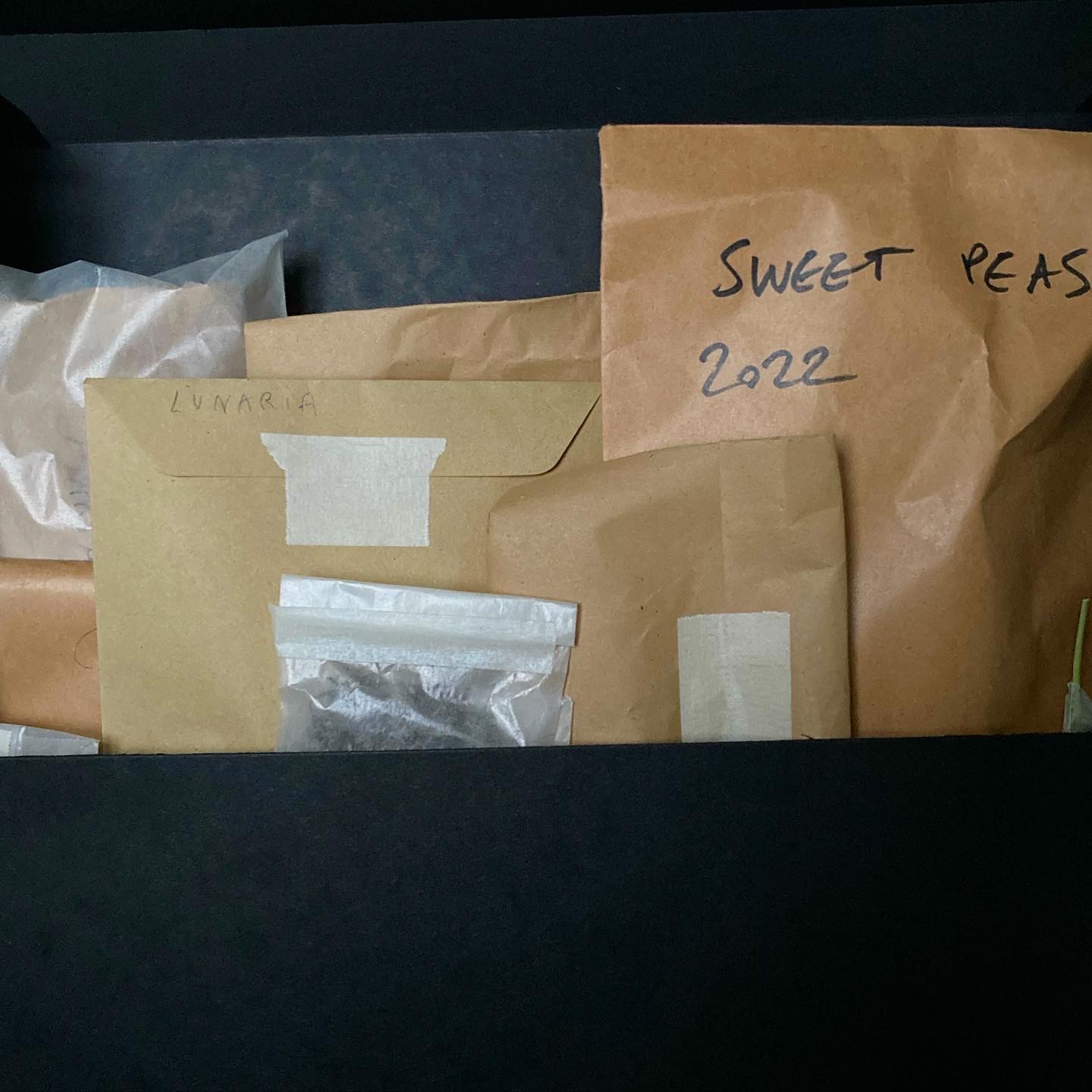
On the garden table you will find working texts, books, seeds, tools and more: a gathering of objects and ideas on what it means to work with nature within an artistic practice. On a small side table is the artist edition poster about last year's research 'The Sympoiesis Garden' printed with Track Report: a map of the start of this garden project with patches of words and a path for the reader to follow.    


On the floor in the middle of a string figure patch is a presentation of the work On Sand, three ceramic biotope dishes were made during a collaborative research project with Saskia Van der Gucht (researcher at Sint Lucas Antwerpen) and Eline De Clercq. These containers holds sand carried by the wind to Antwerp more than 10,000 years ago, during the most recent glacial time. With the help of archaeologists, the artists were able to retrieve this sand from the dig site in Antwerp’s Leftbank area, right at the heart of the PFAS pollution, buried under layers of land and history. The material holds aspects of care, habitation, touch and invisibility. In the clay receptacle the sand is once again given the opportunity to become a habitat for plants and animals. It’s not a reconstruction of the original fauna and flora, it’s a curiosity-fuelled ‘what if’ situation: the artists want to look after and care for the sand like a miniature nature reserve.  


You can visit the community garden via the Academy's main entrance at Mutsaardstraat. 

IG @royalacademyantwerpgarden 


The Sympoiesis Garden.

  An Art & Ecology project and research into gardening as artistic practice.

In September 2022 I started a one year research at the Royal Academy of Antwerp. For the duration of an Academic year I shift my practice towards organising a community garden together with the art students. We meet weekly to garden together in the historical garden of the Academy.  

Sympoiesis means 'making together', it comes from the book Staying with the Trouble by Donna Haraway. In the garden we work towards restoring ecology from a non-human-centred perspective based on the books of Donna Haraway, Anna L. Tsing, Robin Wall Kimmerer, Jamaica Kincaid and many more. We focus on diversity in plants, soil, critters, patches, views and techniques. We try to decolonize the garden practice and take up a multicultural and non-binary practice.  

Climate change is only going to become more important, and many artists care about how they can help. In order to find an meaningful approach with ecology it is interesting to work from a pratice based on understanding: to really engage with soil, plants, birds, insects... 

Working with nature goes both ways, it will restore ecology in the garden and it will inspire new ways of thinking within an artistic practice. This change of perspective is a shift towards a multitude existing together, a thinking with. When we touch nature, nature touches us, and the trees, stones and compost become meaningful, together we make sense.

The historical garden of the Royal Academy is a protected area, with a landscape design from 1905 and to be able to open up this garden to work together is a meaningful and very important change in the whole ecology of the Academy. Now we have a place where we can interact and study with nature.

I am writing a detailed page on the continuation of the project: the changes in the gardens and what comes in to live with us on a separate page: https://elinedc.blogspot.com/p/the-royal-academy-of-antwerp-garden.html

You can also follow the instagram profile: https://www.instagram.com/royalacademyantwerpgarden/

During this year I keep my studio practice and continue to paint, draw, photograph, film, write and all the other things I like to do in a studio but it will be less vocal. The Gesamthof, A Lesbian Garden continues as well and is very much connected to this research, this tiny ecology is in a healthy condition and getting better all the time. The spill over effect of lots of plants in a small place means we can share seedlings and divide and share plants with the garden community to increase the diversity in the Academy gardens. 

Both projects, the Gesamthof and the Sympoiesis Garden, are pioneering in art & ecology, they are among the first and we invent new futures as we go along. There is a lot of groundwork to be done and we can do this because of the support and interest from both within and outside the Academy.
 

The historical garden of the Academy of Fine Arts is located in the cente of the city of Antwerp.
 

The communication started with anonymous notes left in various places in the Academy to keep expectations open.


The secret garden was a bare patch of ground and we built a natural pond for biodiversity.


We start small, it's not about reaching a deadline, this project is ongoing in its very nature.
 

We work from a multispecies perspective, this is not about beauty or produce in a human-centred design.

 
The plants and seeds are mostly leftovers from the Gesamthof and selected for the context in the Academy: a woodland patch or a secret garden.